

Tammy Seaton and her husband Stuart talk about finances now, or rather they text about them. She types up a list of bills that need paying or purchases to budget for that month, and he responds with a report of transactions and his own notes.
Five years ago, a couple of years after their adopted son Kayden joined the family, Stuart lost a well-paid job due to health issues and took a new job with a 60% pay cut. Tammy worked when she could as a house cleaner and bus driver while learning how to care for and at times homeschool Kayden (now 10), who has autism and developmental delays. The family was in crisis.
“When you’re a survivor, you don’t have the skills on making smart goals,” said Tammy. “You don’t even know what that looks like. You’re just trying to get through what’s happening right then.”
Tammy and Stuart relied on debt to make ends meet.
“There was this element of if we don’t talk about it, it’s not happening with their finances,” says Courtney Boyce, a social worker at Good Neighbors of Blount County and Tammy’s mobility mentor through the East Tennessee Collaborative program (ETC). “They have come full circle with all of that now.”

Tammy joined ETC in January 2024. Funded by the Tennessee Department of Human Services, the ETC program empowers parents and caregivers living below the poverty line or those in a group known as asset-limited, income-constrained employed (ALICE) to overcome hurdles to reach financial independence. In Blount County, where Tammy lives, 37 percent of households fall into these two categories.
Through ETC, participants have access to mentoring, career planning, basic needs assistance and skill enhancement to work toward goals around education and employment, financial security, and family stability and well-being.
With Courtney’s support, Tammy began her ETC journey by setting attainable goals around reducing debts, increasing savings, and learning how to budget as a new household of three with more needs and less income. Both Tammy and Stuart have grown children. Because the couple adopted Kayden through a “kinship adoption,” they did not receive adoption-related financial assistance from the state.
Tammy’s first goals were simple but significant: budget for family meals and get a clear picture of debts and financial obligations.
Like Tammy, two-thirds of ETC participants set goals in financial management. After just 19 months of the program, participants achieve 79 percent of their financial goals. Through United Way, Courtney recently completed a financial social work certificate to better support her mentees as they work toward these goals.
Tammy also joined a monthly budgeting class through Good Neighbors of Blount County where she learned how to create a budget, track spending, and calculate her bottom line each month. Soon, she convinced Stuart to join.
“Everything she did, every small thing that we talked about, there was a true effort to be able to implement,” explained Karla Suszek, Executive Director of Good Neighbors of Blount Country and class instructor. “I got to see how the family was communicating better, talking about money. It wasn’t one of those taboo things.”
Stuart recruited other families to join the class and started teaching Kayden about money. Tammy keeps a thick notebook of everything she has learned. Next year, they’ll co-lead the class with Karla, helping other families gain a financial footing.
In June, Tammy took a new job as a daycare teacher at Apostolic Christian Academy, where her son attends school. The steady paycheck helps the family stay on track.

Focusing on Family
When Kayden joined their family at just three years old, Tammy and Stuart realized they were going to have to parent differently. His behavioral and development challenges required trauma-informed parenting and a strong understanding of neurodivergence.
Through ETC, Courtney connected Kayden to specialized tutoring to help him overcome challenges at school and a soccer camp, where he could build social skills. Courtney and Tammy talked mentor to participant, but also mom to mom, sharing strategies to manage hard moments.
“I’ve had to learn to stop and look at the situation before I react… I didn’t know how to parent him until we started here,” Tammy said.
Through ETC, 65 percent of participants set goals around family stability. Some 76 percent of those goals are completed after 19 months of ETC. While that looks different for each family, building a strong family foundation is critical to long-term stability.
Tammy also learned the importance of self-care–getting health screenings, enjoying a cup of coffee while Kayden meets his tutor, or keeping a calendar. These small acts help her show up stronger for her family.
A New Passion and Career
In caring for her son, Tammy also found a new calling. When the local therapy center that serves children with autism was short staffed, Tammy decided to become a registered behavior technician (RBT) to support her son. An RBT is a hands-on therapist who helps kids with autism build skills and overcome behavior challenges. ETC helped cover her tuition.
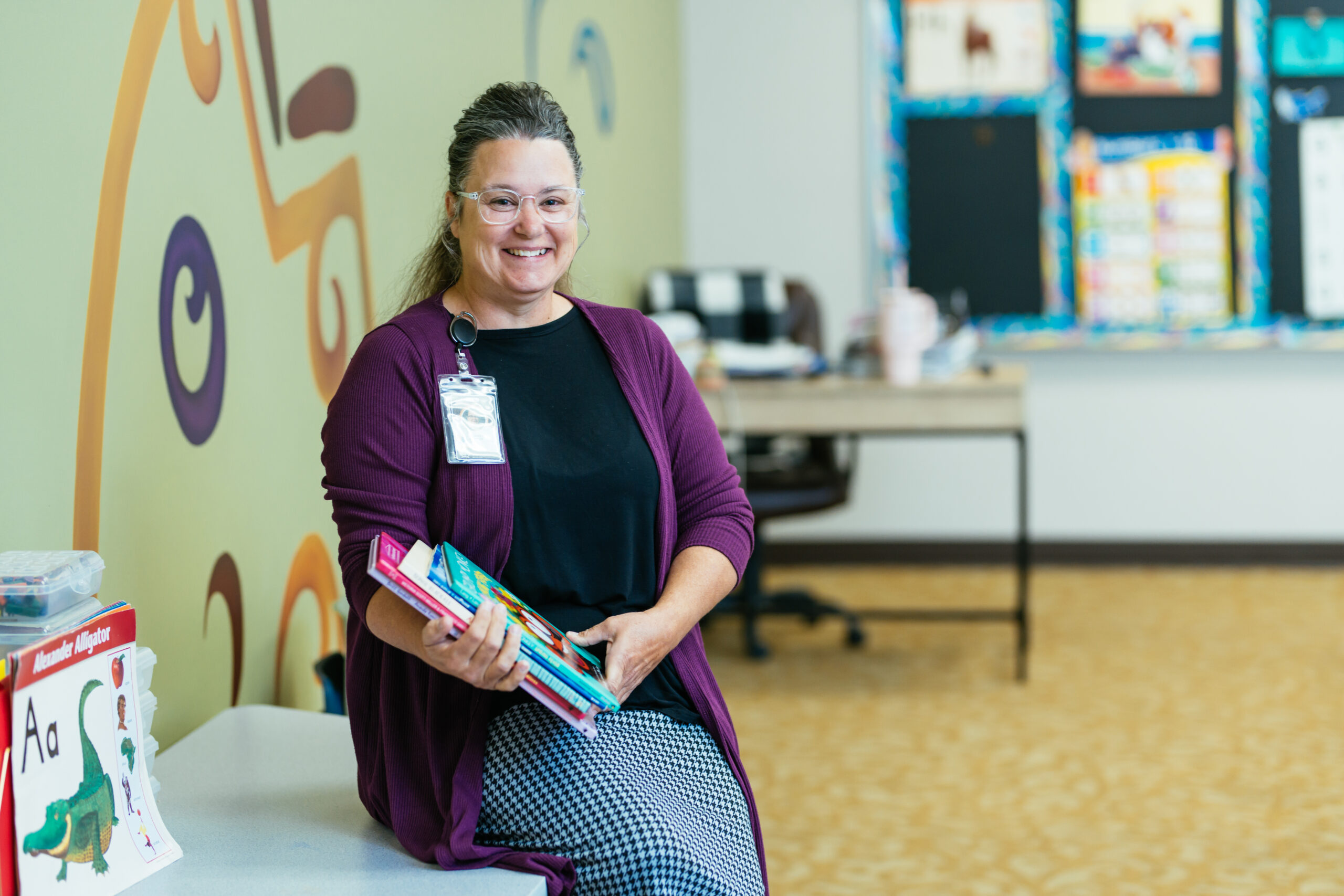
Now, she not only applies her training to parenting, but also brings these lessons into her classroom to help students regulate their emotions and manage challenging behaviors. She is working to expand the school’s special needs support and shares new techniques with fellow teachers. The calm down chair, a tactic Tammy introduced, is now in every classroom.
“I’ve been really proud of the two of them together,” Courtney said of Tammy and Kayden, who has made big strides over the last two years. “I think the school itself had the heart to help serve these families, but they didn’t have the knowledge.”
Tammy is proud of the fact that she was able to finish school to get this certificate.
“I had tried three times [to complete school],” she said. “And now I feel that I can move forward and keep moving forward. I didn’t have that when I came here.”
Currently, she is working toward her Child Development Associate certification at Roane State. ETC helped to clear a nominal debt at a previous college to free up Tammy’s transcripts so she could enroll. Apostolic will provide support as she continues to earn her associates.
“I’ve got to be able to do something with myself,” Tammy said. “To better myself so that when I am older, I can still be what I need to be for [my son and grandchildren] and still financially be able to take care of needs.”

Paying it Forward
As her time with ETC winds down, she and Stuart use their skills and experiences to help others. When a single mom and fellow ETC participant needed childcare so she could return to work, Tammy found space in her classroom. At church, they lead two classes on conflict management and recovery, incorporating tools they’ve learned about trauma-informed parenting, behavior regulation, and budgeting. Tammy regularly refers other families to ETC.
Behind all of this is a truth Tammy has come to believe deeply during her time with ETC.
“If you want to have a strong community. You’re going to have to have strong families.”
Learn more about the East Tennessee Collaborative program. Go to https://uwgk.org/etc/.