
KNOXVILLE, Tenn. (June 12, 2026) — United Way of Greater Knoxville (UWGK) is sharing newly released ALICE data that explains financial realities facing households across East Tennessee.
ALICE stands for “Asset Limited, Income Constrained, Employed,” which represents households with one or more individuals who are working but still struggle to afford essentials such as housing, childcare, food, transportation, healthcare and technology. These households make enough to fall above the Federal Poverty Line (FPL) but not enough to meet monthly expenses.
According to the 2026 ALICE Report, Tennessee ranked 36th in the nation for financial hardship among all 50 states and the District of Columbia. Across the state, 41% of households were living below the ALICE threshold. This means 4 out of 10 neighbors were either in poverty or earning less than what it takes to afford the basic cost of living.
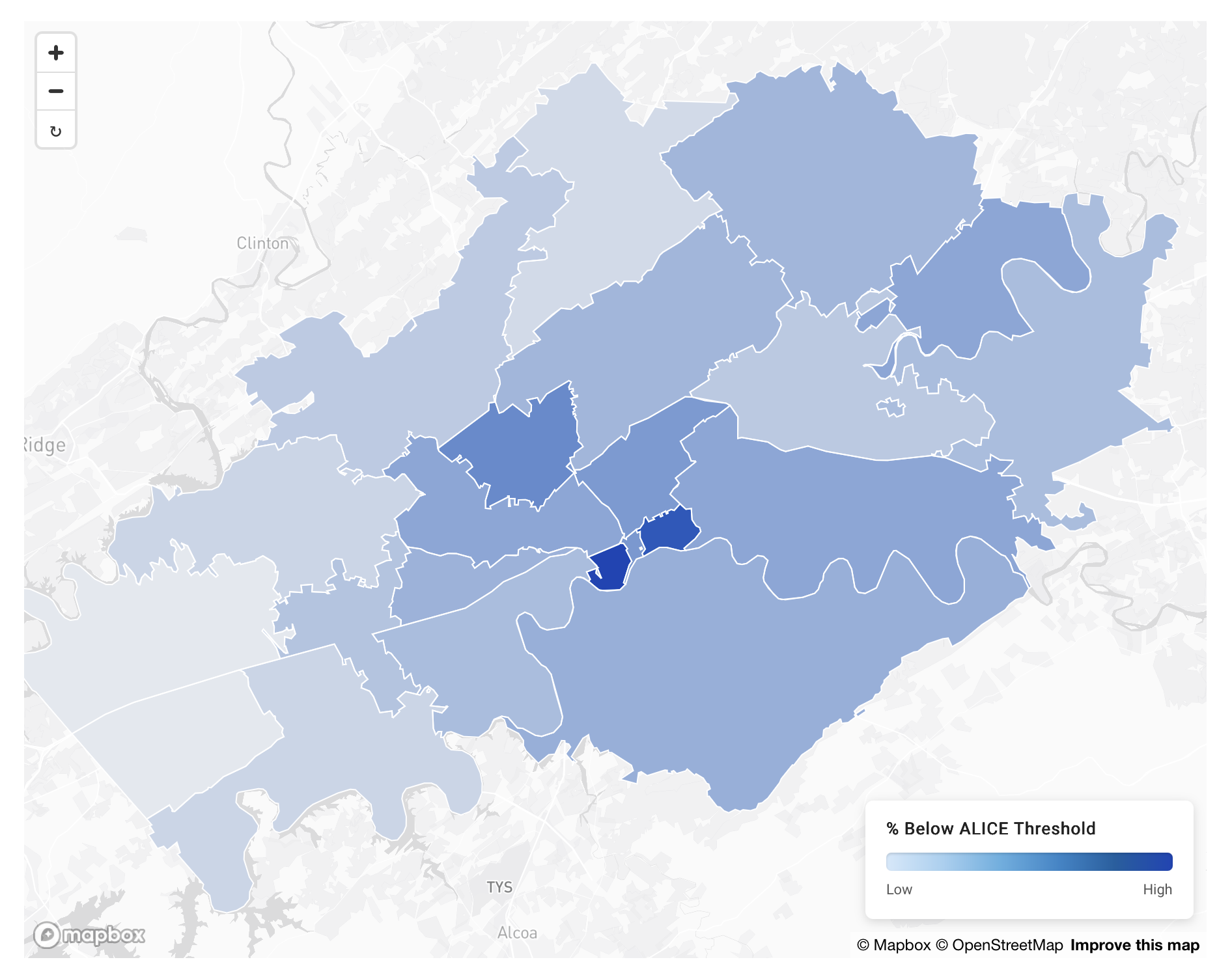
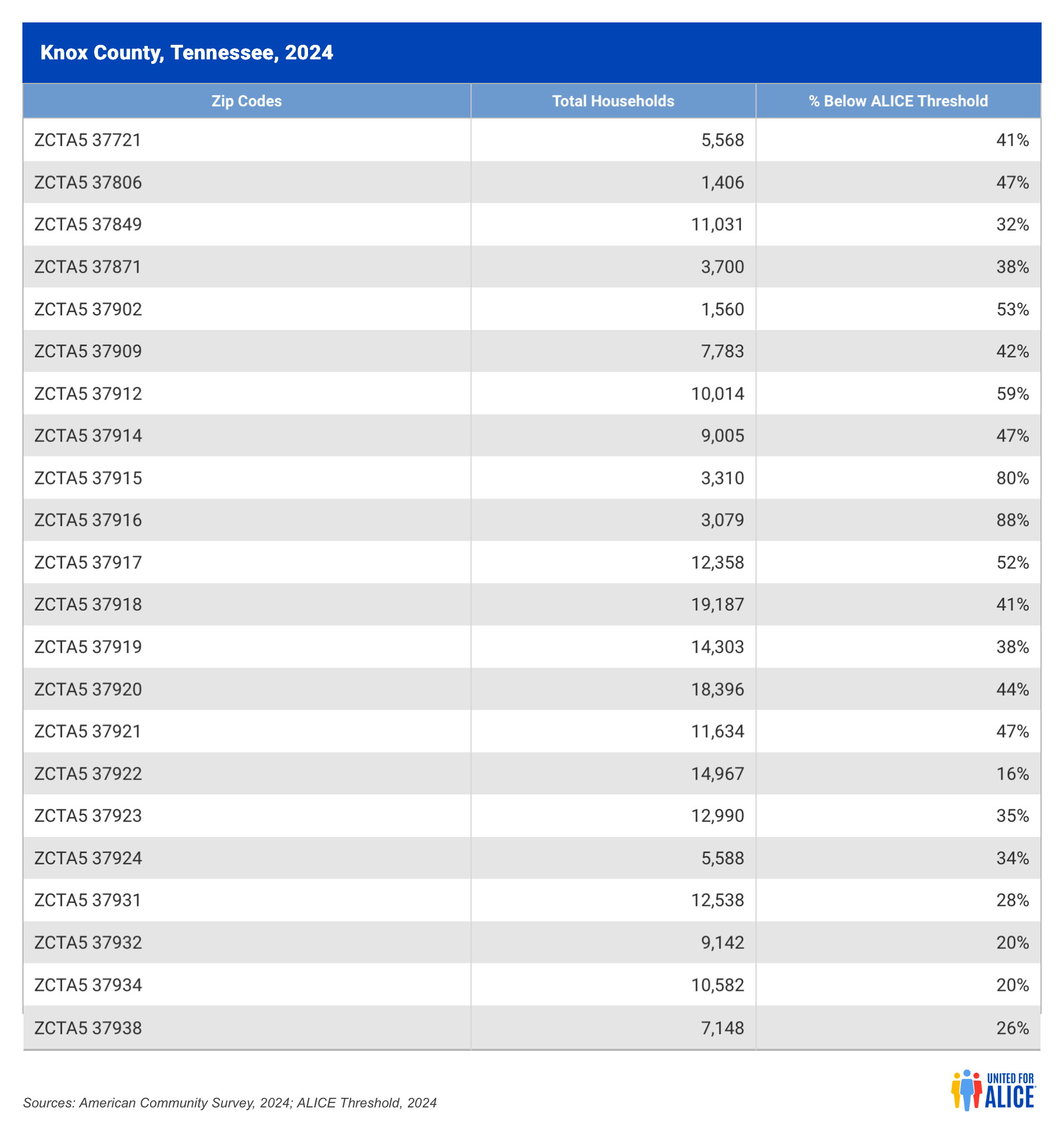
In Knox County, 13.6% of households live below the FPL and an additional 26.2% are ALICE, totaling 39.8% of county households that currently are in poverty – or at risk of falling into poverty. When taking a closer look at zip codes and census tracts within the City of Knoxville, the numbers increase to 19.2% below the FPL and an additional 30.5% ALICE households, totaling 49.7% of households below the ALICE threshold. In some communities and zip codes within the city, these numbers reach as high as 80-88% of households below the ALICE threshold.
The report also found that financial hardship remains the highest among some of Tennessee’s most common occupations, including cooks and servers, cashiers, healthcare workers, janitors and construction laborers. ALICE households in Tennessee also include some teachers, registered nurses, manufacturing and production workers, professional drivers and customer service representatives.
“ALICE reminds us that many working families in Knoxville and across East Tennessee are contributing every day, to the local economy and community wellbeing, while still navigating the rising cost of basic needs,” said Chrystal Armstrong Brown, CEO of United Way of Greater Knoxville. “We know that there are families that are choosing between groceries or medicine, working every day while living through the threat of eviction, and are one emergency away from personal financial crisis.”
Knoxville has the steepest five-year disparity since the COVID-19 pandemic, with rent up 60% between 2019 and 2024 and wages up 27%, creating a 34-point gap – the widest in the country – according to the United Way of the National Capital Area’s January 2026 study. While the overall number of financially insecure households in the state has decreased slightly in recent years, the number of households below the ALICE threshold continue to trend upward as costs of living increase.
In November 2025, when SNAP benefits were disrupted, local pantries reported 20-50% increase in demand including a significant portion being working families accessing food resources for the first time. In response, the City of Knoxville declared an emergency and invested $100,000, matched 100% by United Way of Greater Knoxville, for a total of $200,000 in relief funding. While traditional emergency assistance is available, as the numbers of working households needing assistance grows, a more holistic approach that supports families on a journey to stability has proven to be successful.
“Often, the difference for a family is having the right support when they need it,” said Kaki Reynolds, UWGK Sr. Director of Economic Mobility. “The ALICE findings help inform the work we do at United Way of Greater Knoxville and the partnerships we form, including those centered around economic mobility. Through the East Tennessee Collaborative, for example, we’re working alongside partners to make sure families can access resources with a supportive mentor so they can stay on a path toward stability. This model works.”
In 2025, its third year, the East Tennessee Collaborative (ETC) served more than 872 families across East Tennessee, helping to reduce the poverty rate of participants from 66% to 35%, providing 157 degrees and credentials while achieving a 63% employment rate.

Similarly, through ALICE@Work, United Way partners with local employers to remove workplace barriers to economic mobility, helping companies offer practical supports like financial wellness, flexible scheduling and childcare that benefit both the employee and the employer.
Through strategic investments, public private partnerships, directly serving families and engaging employees, United Way of Greater Knoxville continues to mobilize resources to meet the needs of these families and to improve education, financial stability and health outcomes across East Tennessee.
The full Tennessee 2026 United for ALICE Report and additional resources are available at uwgk.org/alice.
# # #